While there is considerable debate over the genesis of the open-world genre due to its varied interpretations, there’s a collective agreement that GTA 3 set an exemplary standard, giving us the definition for modern-day open-world games. Executive producer Sam Houser describes GTA 3 as ‘Zelda meets Goodfellas’, a fitting title for a game with a silent hero freely roaming around the sandbox following a story full of narcissistic, egotistical and maniacal gangsters, in conjunction with moving towards 3D (the first two GTA are top-down 2D games), created a landmark product which is now considered one of the most significant titles in the history of open-world genre and video games in general. Besides the amount of mayhem it encouraged, one of the reasons it was so celebrated was the free-roaming, go-anywhere-you-want approach to its city. But that is only partially true since the go-anywhere-you-want approach in this game depends on the story progression. There are three boroughs, Portland, Staunton Island, and Shoreside Vale, and the latter two areas are only unlocked as the player progresses through the storyline.
GTA 3, or any open-world game by Rockstar Games, tries to give the player a sense of freedom throughout the game while trying to maintain a coherent narrative. In an interview with Entertainment Weekly, Dan Houser, producer and writer of GTA 3 and brother of aforementioned Sam Houser, had the following to say about GTA 3’s design of balancing freedom and trying to maintain one overarching plotline.
Q. All of Rockstar’s open-world games graft the non-linearity of the gameplay onto one overarching plotline. In Vice City, it’s the rise of Tommy Vercetti. In Red Dead, it’s John Marston’s quest to save his family. Would you ever want to do a GTA more in the style of Fallout, where the player can go in any number of different directions, and there’s not necessarily that single overarching plotline as a backbone?
A. The differences between us and a Fallout are not that pronounced. GTA started out as an action-adventure game. Games like that started out as RPGs. But if you looked at them now — where they all ended up — to a layperson, the differences are much less profound than the similarities.
But in terms of your core question, that’s sort of an interesting dilemma. You’re constantly balancing freedom, the ability for people to generate stuff themselves. Making it too complicated takes it away from a large part of the audience. People also love narrative, and removing strong narrative removes a lot of their guidance through the game. The sense of accomplishment, the sense of finality with the game: That is important.
So, how does GTA3 characterise exploration in its open-world setting when the go-anywhere-you-want-approach is only partially true, or any open-world game for that matter?

According to the Reactance Theory proposed by Jack W. Brehm in 1966, “When individuals perceive their freedom of choice is being restricted, they experience psychological reactance, a motivational state aimed at reclaiming that freedom.” However, if presented with the desired freedom, the players will be riddled with choice overload, causing decision paralysis and leading to them walking away from the game. In the last post, everything I suggested about the free-roaming nature of open-world games is true. However, that’s just an illusion that the game designers have to conjure within the players, which acts as a veneer for the actual “Indirect Control” that the game designers employ. That veneer is vital because people think they want the freedom that open-world games offer, but they only wish for the allure of that freedom. What’s actually real are the sentiments aroused while playing a game rather than the actual reality. The act of balancing just the right amount of illusion of providing a sense of freedom using indirect control is where the answer to the above question resides. Jesse Schell’s The Art of Game Design: A Book of Lenses points out six such “Indirect Control” methods that generally balance freedom and good storytelling well.
- Constraints
- Goals
- Interface
- Visual Design
- Characters
- Music
These methods are cultivated for a generalised approach to game development. Still, within the context of the topic covered in this post, balancing the narrative and exploration in an open-world game, the effects of indirect control methods of constraints, goals, and characters are more pronounced than others. The illusion also has to facilitate our actions to be meaningful. That’s done by providing a sense of progression. An experience is fostered into a great experience when players believe that their actions in the game have consequences. So when, in GTA 3, a part of the open world is blocked off because, narratively, it does not make sense to explore it yet, it is done to induce that feeling of progression, as explained by Dan Houser in the same interview.
Q. In GTA III, you begin in the lower-class corner of Liberty City, a kind of Brooklyn/Queens area. Over the course of the game, you expand into the Manhattan-ish downtown, and then finally into the wealthy suburbs. When did you hit on that as the progression for the game?
A. That Liberty City was not particularly meant to be New York. That was meant to be a hybrid of a generic American city: Chicago, Pittsburgh, Detroit, New York, Philly. An old, post-industrial American city. [GTA III] was America, whereas Vice City was clearly Miami.
In terms of flow, you wanted to start out feeling poor and work to being richer. That made logical sense. You also wanted to start in the underworld, so it had to be the roughest, ramshackle bit of the map. Rundown docks, that kind of stuff. And then, if you’re gonna meet rich guys and gang bosses, they were gonna be suburban, or in the downtown high-rises. That made sense for later in the game.
We always wanted to end with that big suburban scene around the dam, which obviously doesn’t fit into any particular movie, but seemed like it would be a kind of iconic way to end the game.
I personally like this approach because there is a constant feeling of progression. In all GTA games until GTA 5, the map is blocked off because you aren’t worthy enough to be there yet, so my interaction with the story is not only because I want to see the narrative to its conclusion I am also thinking of the world I have yet to explore but after GTA 5 that constraint wasn’t implemented so now my engagement in the narrative is solely to see it through, without anything else to look forward to. However, GTA 3 was the first of its kind. Hence, everything implemented in the game was a novelty, and with the benefit of hindsight, that novelty has worn off to the point that today it is practically unplayable. But it doesn’t seem like that for Rockstar Games because Red Dead Redemption 2 still keeps every bit of the design structure they implemented in GTA 3 and compounds them to eleven, which significantly hurts the game.

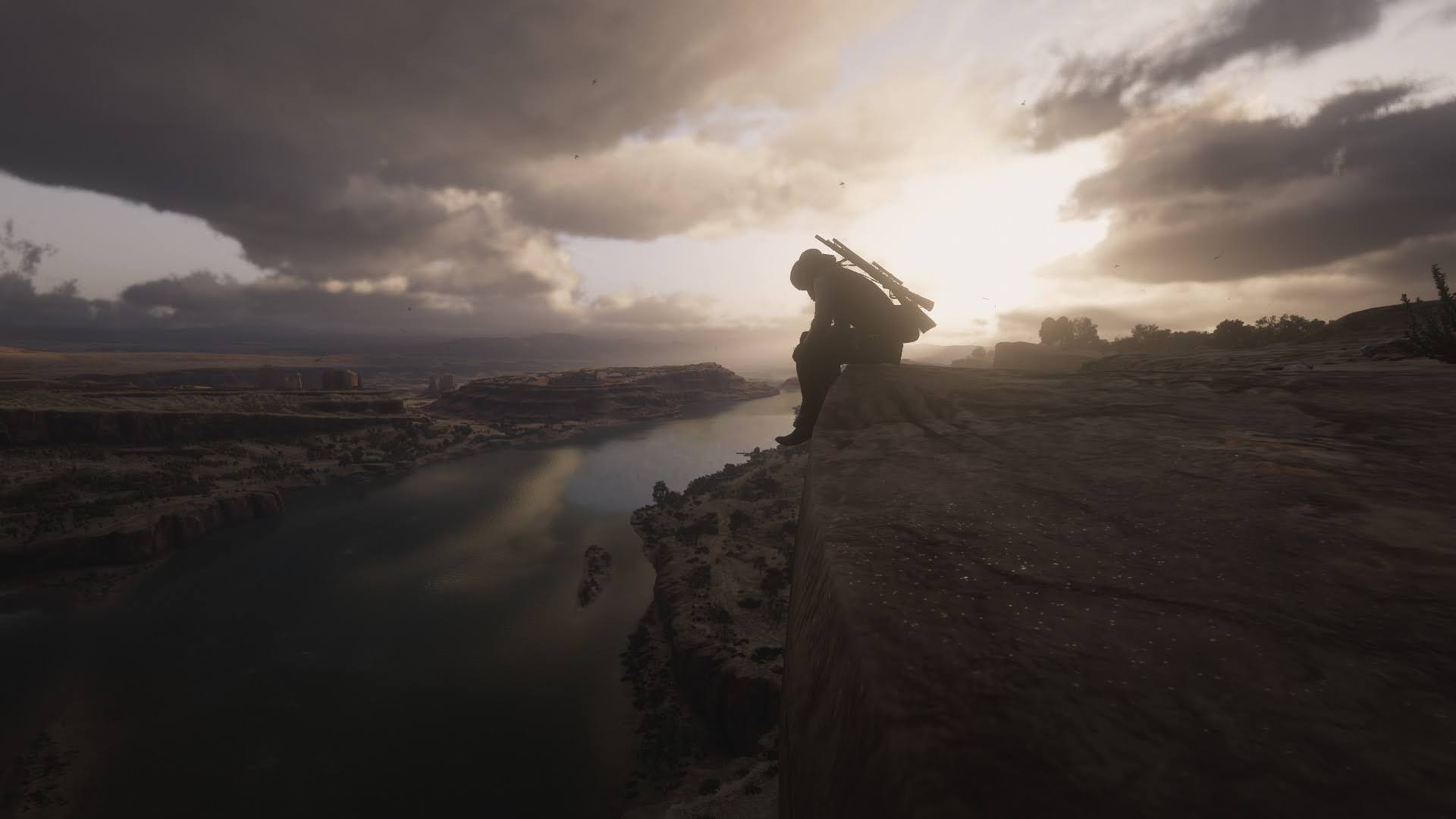
Let’s scrutinise the developer’s latest release, Red Dead Redemption 2, which otherwise deserves nothing less than a dedicated novel because of its mythical stature. Over the years, Rockstar Games has plunged into creating increasingly grandiose narratives since GTA 3. The meticulously designed and painstakingly detailed open world with a graphical fidelity which would put contemporary games implementing ray-tracing to shame, immaculate animations, pristine voice acting, stupendous soundtrack, unrivalled writing, fascinating characters and undoubtedly one of the best, if not the best story a video game dares to attempt, along with the countless mechanics employed like the camp mechanic, an honour system, an unnecessarily complicated bounty system, a hunting mechanic, a horse bonding mechanic, some RPG elements, crafting system, fishing system, witness system, random encounters with NPCs and some more (I may have forgotten some cause this is a dense game to unwind) indeed shows that this is a labour of love of thousands of employees (nearly 3000 people worked on this video game), which emerged from the crunch they had to go through while developing it. It doesn’t stop there; NPC AIs are coded to have their routine throughout the day; animals and plants extinct since that era (the 1890s) have been studied and included in the world so that it can feel more authentic, the weather mechanic is uncanny, the skybox implemented renders every frame as a painting of that era, and there are ecosystems dictating the regional behaviour of the wildlife depending on the terrain. I can’t even imagine how they might have worked on the sound design because that had to be one gargantuan task. Every interaction with the world asks you to escape into this rendition of the American frontier, which readily emphasises the cowboy way of life.

However, within their opulently ambitious storytelling fervour and increasingly grandeur open-world spaces, there still exists the archaic mission design structure, which has progressively struggled to balance the freedom and the narrative, and this inconsistency is exceedingly apparent in Red Dead Redemption 2. The constraints applied when you start a story mission often forget that this is an open-world game. It is acceptable not to tie every single mechanic in the game to the narrative, as some provide a way just to explore this universe. But Rockstar Games wants you to experience the narrative as they intend to, so the subtlety of balancing the illusion goes out of the window. For the main story missions, the game restricts you to doing precisely what the instructions at the bottom of the screen order you to do; stray an inch away by approaching the objective with your own problem-solving skills, and the ‘Mission Failed’ screen pops up with the most blatant reasons for said failure. Given that the story is about a group of outlaws running away from the crackdown of industrialisation to maintain their freedom, the amount of constraints in the story missions is really ironic. Since GTA 3, they have just gotten increasingly worse, and Red Dead Redemption 2 has an existential crisis about its own structure. The majority of the main story missions boil down to this template.
- Go and meet the character or characters where the mission starts.
- Cutscene
- Follow that character or characters where the mission actually takes place.
- Cutscene
- Oh no! Something went wrong again! Shoot your gun and kill all the marked enemies indicated on the mini-map at the bottom left while following the path exactly as shown in the mini-map to get away.
- Cutscene
Now you are allowed to go anywhere you like. You are supposed to be a rootin-tootin cowboy shooting badass, but the story missions never test your skills in that frame. There is no difficulty curve to overcome, other than your reading ability.

A dissonance between the open-world space and the narrative also becomes blatantly apparent when you gun down a whole town and serenely waltz back into that town after a couple of hours, pretending like you weren’t the cause of the mayhem and the bloodshed that just ensued there. The aforementioned mechanics try their best to provide a coherent experience individually, but as a whole, they lose sight of one another. A couple of examples are the honour system and camp upgrades; there is no reason for you to maintain a high honour in the game because, in the current state of the game, you can be the most dishonourable man in the camp, never invest in its upgrades, or interact with the characters, and one of the voiceovers towards the end of chapter 6 will still announce, “You are a good man, Arthur”. Some of these discrepancies could have been resolved if the story missions had been locked behind a threshold of your honour and upgrades in the camp, because camp upgrades would incentivise exploration and indulging in activities spread throughout the game. The honour meter would incentivise conciliatory character interactions. The trade-offs done to portray a highly dramatic story took a toll on the mission and overall open-world design of the game. With their upcoming game, which is none other than GTA 6, I really hope they tackle this dissonance, and god forbid, they improve their controls because the controls of RDR 2 still follow the outdated layout of GTA 3, and their choice of favouring realism over smoother controls, ends up in sluggish character movements. The only reason Rockstar Games gets a pass is because the story is highly engaging, it has a soul which has been long lost from movies and books today, the characters are well realised, and the open world is just too beautiful to be in a game, so you are more likely to forget these issues.

I intend to continue scrutinising two more games, Elden Ring and The Legend of Zelda: Breath of the Wild, in the context of the topics discussed above in the next post. The three games, Red Dead Redemption 2, Elden Ring, and The Legend of Zelda: Breath of the Wild, have unique approaches to balancing the illusion. Elden Ring has a similar structure of blocking off the sections of the map, but it is not done narratively, as we will see further. Zelda is a whole other beast of a game to unravel.
Sources
Daryl Talks Games. (2022, July 9). You Don’t Actually Want Open World Games. YouTube. https://www.youtube.com/watch?v=-O3oe8sSRhQ
Disha Garg. (n.d.). Reactance theory. The Decision Lab. https://thedecisionlab.com/reference-guide/psychology/reactance-theory
DJ Peach Cobbler. (2021, May 11). Grand Theft Auto 3 Retrospective: A Disappointing Foundation. YouTube. https://www.youtube.com/watch?v=hvtRrulAagI
Razbuten. (2022, May 31). The Structure of Open-World Games is Weird. YouTube. https://www.youtube.com/watch?v=3UBhy2nDlxw
Schell, Jesse. The Art of Game Design: A Book of Lenses. Burlington, Mass., Morgan Kaufmann, 2008.
The Freedom Fallacy: Understanding “Player Autonomy” in Game Design. (n.d.). YouTube. https://www.youtube.com/watch?v=3vct13OhIio
The Paradox of Open World Game Design. (n.d.). YouTube. Retrieved February 1, 2024, from https://www.youtube.com/watch?v=7Rmqx6mHz-g
TreeFitty. (2011, October 24). Entertainment Weekly Talks with Dan Houser – GTA III News. IGrandTheftAuto.com. https://www.igrandtheftauto.com/news/gtaiii/588/entertainment-weekly-talks-with-dan-houser/
Why The Best Open World Is A (slightly) Closed World. (n.d.). YouTube. https://www.youtube.com/watch?v=-as8kVASgXw
Leave a Reply